
The Global Minimum Tax Is Here
Why It Matters for Your Business, Even If You are Not a Multinational
Olivier Maes
6/20/20253 min read
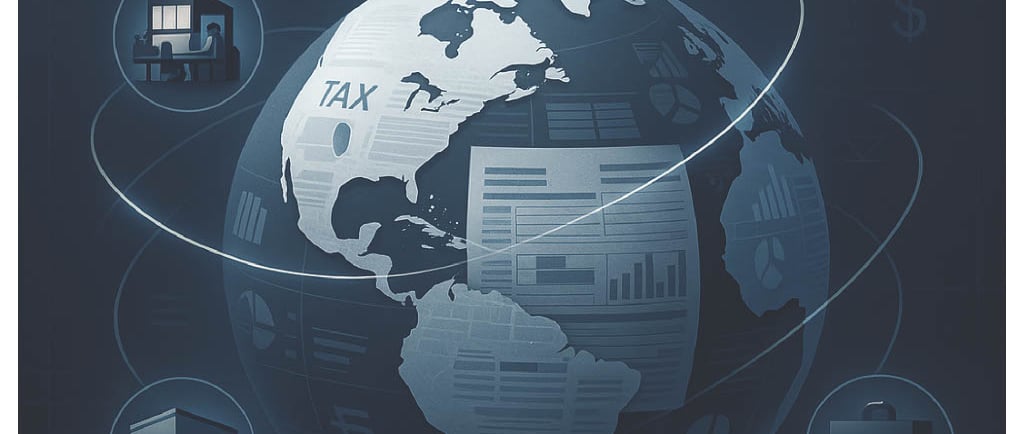
As a Fractional CFO, we are not just tracking financial shifts—we help you navigate them strategically. One of the most significant developments on the global tax landscape today is the implementation of the Global Minimum Tax under the Organisation for Economic Co-operation and Development’s Pillar Two framework. While this was designed for the world’s largest multinationals, its impact is already reaching businesses of all sizes across the U.S., U.K., and Europe.
Whether you are managing a domestic business, scaling across borders, or backed by private equity, these changes could affect your tax exposure, financial reporting, and future growth plans. Let me break it down—and more importantly, show you how to respond with clarity and confidence.
What Is Pillar Two?
Pillar Two introduces a 15% global minimum effective tax rate applied on a country-by-country basis. If a multinational pays less than that in any jurisdiction, top-up taxes are triggered to bring them up to the minimum—either by the local government or the jurisdiction of the parent entity.
While aimed at companies with €750 million+ in annual revenue, the framework sets a global precedent that extends beyond those thresholds:
The EU has made it mandatory for member states to implement Pillar Two beginning December 2023, with more provisions coming into effect by December 2024.
The U.K. has adopted the rules effective January 2024, including both an Income Inclusion Rule and a Domestic Top-Up Tax.
The U.S., although not officially implementing Pillar Two yet, has introduced the Corporate Alternative Minimum Tax (CAMT)—which reflects similar principles and may be a precursor to broader alignment.
Why Should You Care—Even If You are Not a Multinational?
Clients often ask us: “We are not operating on a global scale—do we really need to pay attention to this?” Our answer is a resounding yes, and here is why:
1. You May Be Indirectly Exposed
You do not need to be the one paying the top-up taxes to be affected by them. Businesses that:
Partner with, supply to, or share ownership with multinational groups
Operate cross-border subsidiaries, even small ones
Are backed by funds or private equity with international structures
…could face new compliance obligations and transparency requirements.
2. It is Creating New Complexity—for Everyone
Even if you are not subject to the tax directly, the ripple effects are real:
More rigorous reporting around tax strategy and intercompany pricing
Increased demands from auditors, lenders, and regulators
The need to demonstrate clear understanding of your effective tax position
If you do not have a clear narrative around your tax exposure, others may shape it for you.
3. It Signals the Future of Tax Policy
Pillar Two reflects a global movement toward standardisation, fairness, and digital reporting. Whether or not your local laws change today, you can expect more convergence around these norms over the next few years.
How We Help Clients Navigate This
In times like this, proactive strategy beats reactive compliance. Here is how we are helping clients prepare and protect their position:
Assessing Global Footprints Even with modest international operations, we analyse effective tax rates, entity substance, and related-party arrangements to flag potential risks.
Incorporating Tax Sensitivities into Forecasts From top-up taxes to deferred tax impacts, we help ensure your financial models are resilient—and realistic.
Structuring for Resilience We evaluate your IP holdings, financing structures, and entity design with an eye toward long-term optimisation.
Educating Boards, Investors, and Teams we translate evolving tax rules into business language, driving alignment and smarter decision-making across stakeholders.
Final Thoughts: Tax Strategy Is Risk Strategy
Gone are the days when tax planning was just about keeping your filings in order. Today, tax decisions have reputational, operational, and strategic implications.
As your Fractional CFO, we are here to help you:
Identify hidden risks before they surface
Build tax into your broader business strategy
Stay agile in a rapidly changing regulatory world
Even if the Global Minimum Tax was not built for your company, its effects are coming for all of us. Let’s position you to lead—not just keep up.